


Building a skincare routine for acne-prone skin can feel overwhelming. With countless cleansers, serums, exfoliants, and spot treatments available, it is easy to assume that using more products will lead to clearer skin. In reality, an overly complicated routine can irritate your skin and make breakouts harder to manage.
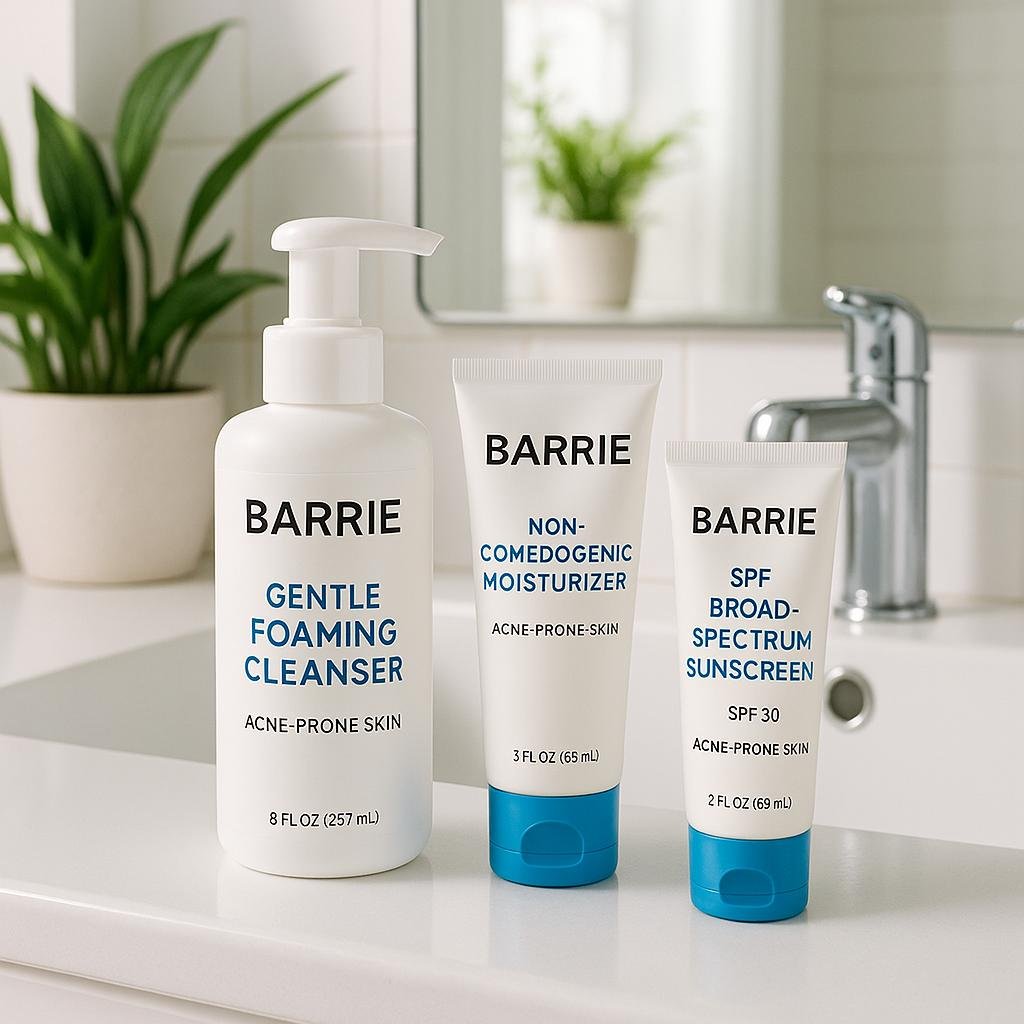
The best skincare routine for acne-prone skin starts with a few essentials: a gentle cleanser, a suitable moisturizer, daily sunscreen, and, when appropriate, an evidence-based acne treatment.
A simple, consistent skincare routine can help support your skin barrier, reduce clogged pores, and improve the appearance of breakouts over time. The right products depend on your skin type, the severity of your acne, and how well your skin tolerates active ingredients.
In this guide, you will learn how to build a morning and evening routine, which ingredients are worth considering, which common mistakes to avoid, and when it may be time to see a dermatologist.
What Is Acne-Prone Skin?
Acne-prone skin is skin that tends to develop pimples, blackheads, whiteheads, and other acne lesions. Acne develops when hair follicles become clogged with oil and dead skin cells, with inflammation and the activity of acne-associated bacteria also playing important roles.
Several factors can contribute to breakouts, including hormonal changes, genetics, certain medications, and the use of products that clog pores in susceptible individuals.
Acne is not necessarily a sign of poor hygiene. Washing your face more frequently or scrubbing harder will not automatically prevent breakouts. In fact, excessive cleansing and harsh exfoliation can irritate the skin and make existing inflammation worse.
It is also possible to have acne-prone skin that is dry, oily, combination, or sensitive. Understanding your skin’s needs will help you choose products that are effective without causing unnecessary irritation.
The Best Morning Skincare Routine for Acne-Prone Skin
A morning routine should remove excess oil, provide hydration, and protect your skin from environmental exposure.
You do not need a long list of products to accomplish these goals.
Step 1: Cleanse with a Gentle Facial Cleanser
Start your morning with a gentle cleanser that removes excess oil, sweat, and product residue without leaving your skin feeling tight or uncomfortable.
If your skin is oily, you may prefer a lightweight foaming cleanser. If your skin is dry or sensitive, a gentle cream or lotion cleanser may be more comfortable.
Look for a product labeled non-comedogenic when possible. This means it is formulated to be less likely to clog pores, although no label guarantees that a product will suit everyone.
Avoid harsh scrubs, abrasive cleansing brushes, and products that leave your face feeling stripped.
Tip: Wash with lukewarm water and use your fingertips rather than scrubbing your skin aggressively.
Step 2: Consider an Acne Treatment if Needed
A targeted treatment may help address the type of acne you experience. However, not everyone needs a treatment serum in the morning.
Some commonly used acne ingredients include:
- Benzoyl peroxide: Helps reduce acne-associated bacteria and inflammation. It can be useful for inflammatory pimples but may cause dryness and bleach fabrics.
- Salicylic acid: Helps exfoliate inside pores and may be useful for blackheads and whiteheads.
- Azelaic acid: Can help with acne and the appearance of post-acne discoloration.
- Adapalene: A topical retinoid that helps prevent clogged pores and is used to treat acne. It is generally applied in the evening according to product instructions.
Choose an ingredient based on your main concern rather than layering several treatments together immediately. Some acne treatments are better suited to evening use, and a pharmacist or dermatologist can help you choose an appropriate option.
If you are pregnant or planning a pregnancy, consult your healthcare professional before using acne medication. Avoid topical retinoids, including adapalene, during pregnancy.
Step 3: Apply a Lightweight Moisturizer
Moisturizer is important even if your skin produces excess oil.
Acne treatments can cause dryness, flaking, and irritation. A suitable moisturizer helps maintain the skin barrier and may make your routine easier to tolerate.
Look for a fragrance-free, non-comedogenic moisturizer if you are prone to irritation or clogged pores. Ingredients such as glycerin, ceramides, and hyaluronic acid can help support hydration.
Choose a texture that feels comfortable on your skin. Oily skin may prefer a lightweight lotion or gel-cream, while dry skin may benefit from a richer cream.
Moisturizing does not mean you are making your acne worse. The goal is to find a product that hydrates your skin without triggering unwanted reactions.
Step 4: Finish with Sunscreen
Apply a broad-spectrum sunscreen with SPF 30 or higher every morning.
Sun protection is particularly important if you have acne-prone skin because some acne treatments can increase sensitivity to sunlight, and ultraviolet exposure can worsen the appearance of post-acne marks.
Choose a sunscreen that feels comfortable enough to use consistently. Lightweight lotions, gels, and fluid formulas may suit people who dislike heavier textures.
If you have darker skin, you may prefer a sunscreen that leaves minimal white cast. Tinted sunscreens can be another option, particularly if you are concerned about visible pigmentation.
Reapply sunscreen according to the label, especially after sweating, swimming, or prolonged outdoor exposure.
The Best Nighttime Skincare Routine for Acne-Prone Skin
Your evening routine is an opportunity to remove sunscreen, makeup, and the day’s accumulated residue before applying an appropriate acne treatment.
Step 1: Remove Makeup and Sunscreen
If you wear makeup or water-resistant sunscreen, use a suitable makeup remover or cleansing oil before your regular cleanser if necessary.
Double cleansing is optional rather than mandatory. If one cleanser removes your products effectively without irritating your skin, you may not need a second cleansing step.
Avoid vigorous rubbing, especially around inflamed pimples.
Step 2: Cleanse Gently
Use a gentle cleanser to remove remaining residue.
You generally do not need to cleanse repeatedly to achieve clearer skin. Excessive washing can disrupt the skin barrier and cause irritation.
If your face feels tight, stings when you apply moisturizer, or develops persistent flaking, reconsider whether your cleanser or other products are too harsh.
Step 3: Apply Your Acne Treatment
Choose a treatment that matches your acne type and follow the product instructions.
For blackheads and whiteheads: Salicylic acid or a topical retinoid may help prevent clogged pores.
For inflamed pimples: Benzoyl peroxide can be useful, while other treatments may be appropriate depending on the severity of the acne.
For acne and lingering dark marks: Azelaic acid may be an option for some people because it can help with both acne and post-inflammatory hyperpigmentation.
Adapalene is an established treatment for acne and is often used in the evening. Start at the recommended frequency and increase gradually if appropriate. Applying more than directed will not make it work faster.
Do not introduce several new acne treatments on the same day. Starting multiple active ingredients together can increase irritation and make it difficult to identify which product is causing a reaction.
If your skin becomes persistently painful, swollen, or severely irritated, stop the suspected product and seek medical advice.
Step 4: Moisturize
Finish with a suitable moisturizer.
If your acne treatment causes dryness, moisturizer may help improve comfort and support consistent use. Some people with sensitive skin benefit from applying moisturizer before and after a retinoid, an approach sometimes called the sandwich method.
Follow the instructions for your particular treatment, as application recommendations can vary.
Which Ingredients Are Best for Acne-Prone Skin?
Different ingredients target different aspects of acne. Understanding their roles can help you avoid buying several products that do essentially the same thing.
| Ingredient | Main benefit | Best suited for | Important consideration |
|---|---|---|---|
| Salicylic acid | Helps exfoliate pores | Blackheads and whiteheads | Can cause dryness or irritation |
| Benzoyl peroxide | Reduces acne-associated bacteria | Inflamed pimples | Can bleach fabrics and irritate skin |
| Adapalene | Helps prevent clogged pores | Several forms of acne | May cause initial irritation; avoid during pregnancy |
| Azelaic acid | Helps with acne and uneven pigmentation | Acne and post-acne marks | Results take time and irritation is possible |
| Niacinamide | Supports the skin barrier and may help with oiliness | Oily or sensitive skin, depending on formulation | Not a replacement for established acne treatments |
| Ceramides | Support the skin barrier | Dry or irritated skin | Primarily a moisturizing ingredient, not an acne medication |
| Glycerin | Helps attract and retain moisture | Most skin types | Useful for hydration rather than directly treating acne |
No single ingredient works equally well for every person. The best option depends on the type of acne, the severity of your symptoms, and whether you have other skin concerns.
How to Choose Products for Your Skin Type
Acne-prone skin is not one-size-fits-all. Your routine should account for oil production, hydration, and sensitivity.
For Oily, Acne-Prone Skin
Choose a gentle foaming cleanser, lightweight moisturizer, and comfortable sunscreen.
If clogged pores are a major concern, salicylic acid or an appropriate topical retinoid may help. Avoid trying to remove every trace of oil, because aggressive cleansing can leave your skin irritated.
For Dry, Acne-Prone Skin
Focus on gentle cleansing and moisturizing. Look for products containing ingredients such as glycerin and ceramides, and avoid stacking multiple exfoliating treatments.
A rich moisturizer can still be appropriate for acne-prone skin if the formula suits you.
For Sensitive, Acne-Prone Skin
Keep your routine particularly simple. Introduce one active ingredient at a time and monitor how your skin responds.
Fragrance-free products may reduce the risk of irritation for some people. If your skin frequently burns, becomes very red, or develops persistent rashes, consult a dermatologist before adding more acne treatments.
For Combination Skin
You may have an oily forehead, nose, and chin alongside drier cheeks. Choose products that are comfortable across your entire face, and avoid over-treating areas that are not breaking out.
A consistent basic routine can often be more useful than using a different product on every part of your face.
For Acne-Prone Skin With Dark Marks
Post-inflammatory hyperpigmentation can remain after pimples have healed. This is particularly common in people with darker skin tones.
Azelaic acid may help with both acne and pigmentation, while sunscreen helps reduce the effects of ultraviolet exposure that can make discoloration more noticeable.
Avoid picking pimples and using aggressive exfoliants, which can increase inflammation and contribute to additional dark marks.
A Simple Weekly Plan for Beginners
If you are starting from scratch, the safest practical approach is to establish your basic routine first.
Week 1: Build the foundation
- Morning: Gentle cleanser, moisturizer, sunscreen.
- Evening: Gentle cleanser, moisturizer.
Use this period to check that your basic products feel comfortable and do not cause unwanted reactions.
Week 2: Introduce one acne treatment
Choose a suitable acne treatment based on your main concern and follow its directions. Begin gradually if the product instructions allow.
Continue using your cleanser, moisturizer, and sunscreen.
Weeks 3–4: Assess your skin’s tolerance
Monitor dryness, irritation, and the frequency of new breakouts. Avoid adding more products simply because you have not seen immediate results.
Weeks 4–8 and beyond: Review progress
Many acne treatments need several weeks to show meaningful improvement, and some require longer. The American Academy of Dermatology notes that improvement may begin within four to six weeks, while clearing can take two to three months or longer.
If your acne is worsening, leaving scars, or not responding to an appropriate routine, seek professional guidance rather than continually switching products.
Common Skincare Mistakes That Can Make Acne Worse
1. Overwashing Your Face
Washing repeatedly throughout the day can irritate your skin. For most people, cleansing twice daily and after sweating is sufficient.
2. Scrubbing Away Pimples
Acne is not simply dirt trapped on the skin. Abrasive scrubs can aggravate inflammation and damage the skin barrier.
3. Using Too Many Active Ingredients
Combining several exfoliants, retinoids, and acne treatments without a plan can cause irritation.
Introduce one treatment at a time and follow the relevant instructions.
4. Skipping Moisturizer
Dryness can make acne treatment difficult to tolerate. A suitable moisturizer helps maintain skin comfort and barrier function.
5. Picking or Squeezing Pimples
Picking can worsen inflammation and increase the risk of scarring and post-inflammatory pigmentation.
6. Changing Products Too Quickly
Acne treatments generally need time to work. Switching products every few days makes it difficult to evaluate results and may expose your skin to unnecessary irritation.
7. Ignoring Sunscreen
Sun protection helps reduce additional sun-related skin damage and can help prevent existing dark marks from becoming more noticeable.
When Should You See a Dermatologist?
A basic skincare routine may be enough for some people with mild acne, but others need medical treatment.
Consider seeing a dermatologist or another qualified healthcare professional if you have:
- Deep, painful nodules or cysts.
- Acne that is leaving scars.
- Persistent breakouts despite consistent treatment.
- Significant dark marks that are worsening.
- Skin irritation that makes it difficult to use acne treatments.
- Acne that is affecting your confidence or emotional wellbeing.
A clinician can assess the type of acne you have and recommend suitable prescription or non-prescription treatments.
Seeking help early is particularly important when acne is painful or causing scars, because early treatment can reduce the risk of lasting skin changes.
Frequently Asked Questions
What is the best skincare routine for acne-prone skin?
A simple routine includes a gentle cleanser, moisturizer, and broad-spectrum sunscreen with SPF 30 or higher. An appropriate acne treatment, such as benzoyl peroxide, salicylic acid, azelaic acid, or a topical retinoid, can be added depending on your symptoms and skin tolerance.
Should I moisturize if I have oily, acne-prone skin?
Yes. Oily skin can still become dehydrated or irritated, especially when using acne treatments. Choose a moisturizer that feels comfortable and is labeled non-comedogenic when possible.
Is salicylic acid or benzoyl peroxide better for acne?
They work differently. Salicylic acid is often useful for clogged pores and blackheads, while benzoyl peroxide is useful for inflammatory acne. The better option depends on your type of acne, and some treatment plans use both carefully.
How often should I wash acne-prone skin?
For most people, cleansing twice daily and after sweating is sufficient. Excessive washing and scrubbing can irritate the skin and do not guarantee fewer breakouts.
Can I use niacinamide and salicylic acid together?
Many people can use both, depending on the formulations and their skin’s tolerance. However, you do not need to introduce them simultaneously. Start with one product and add another only if needed.
How long does it take for an acne skincare routine to work?
Some improvement may become noticeable within four to six weeks, but more substantial clearing can take two to three months or longer. Results vary by treatment and acne severity.
Should I use retinol if I have acne-prone skin?
Some topical retinoids are established acne treatments, but cosmetic retinol is not identical to prescription acne medication. Choose a product appropriate for your needs, introduce it carefully, and avoid topical retinoids during pregnancy.
Can sunscreen cause acne?
Some sunscreens may not suit every individual’s skin, but sunscreen itself does not inevitably cause acne. If a product seems to trigger breakouts, try a different formulation, preferably one labeled non-comedogenic.
Is a natural skincare routine better for acne?
Not necessarily. Natural ingredients can still cause irritation or allergic reactions. Evidence, formulation, suitability, and your skin’s response are more useful considerations than whether a product is marketed as natural.
Final Thoughts
Building a skincare routine for acne-prone skin does not require a bathroom full of products. The most effective starting point is a gentle cleanser, a suitable moisturizer, daily sunscreen, and one well-chosen acne treatment.
Choose ingredients based on the type of breakouts you experience, introduce new products gradually, and give your routine enough time to work. Avoid aggressive scrubbing, frequent product changes, and picking at pimples.
Most importantly, remember that acne is a common skin condition, not a sign that you are failing to care for your skin. If breakouts are painful, persistent, or leaving scars, professional treatment can make a meaningful difference.
Medical disclaimer: This article is for educational purposes and does not replace individualized medical advice. Consult a qualified healthcare professional for persistent acne, severe irritation, scarring, or questions about acne medication during pregnancy.
Sources and Further Reading
- American Academy of Dermatology. How to treat acne.
- American Academy of Dermatology. Acne: Diagnosis and treatment.
- National Institute of Arthritis and Musculoskeletal and Skin Diseases. Acne.
- American Academy of Dermatology. Dermatologist-approved pregnancy skin care.
This guide is informational and does not replace individualized advice from a qualified professional.

1 comment